


Iberian-German WE-Heraeus Seminar 2026
Topological Matter:
10 Years After the Nobel Prize
March 29 – April 2, 2026
March 29 – April 2, 2026


The Iberian-German WE-Heraeus Seminar 2026 will convene leading scientists and emerging researchers in topological matter to mark the 10th anniversary of the 2016 Nobel Prize in Physics. The prize recognised groundbreaking theoretical discoveries of topological phase transitions and topological phases of matter, with one half awarded to David J. Thouless and the other half jointly to F. Duncan M. Haldane and J. Michael Kosterlitz. The event will explore the frontier of this transformative research area, emphasising its significance for future technologies in quantum computing, spintronics and energy-efficient devices.
This seminar is organised under the prestigious auspices of the Wilhelm and Else Heraeus Foundation, a major supporter of scientific advancement in the natural sciences.
Scientific Rationale
Topological materials—such as insulators, semimetals, and superconductors—represent one of the most vibrant frontiers in condensed matter physics. They host exotic quantum states with robustness against defects, offering novel functionalities across electronic, photonic, and mechanical systems.
This seminar will:
Assess progress and current challenges in topological matter.
Explore interdisciplinary convergence, including AI-assisted materials discovery.
Foster collaboration between leading institutions in Germany, Portugal, Spain, and beyond.
Focus and Impact
Unique thematic focus: Celebrate 10 years of Nobel-recognised science and its continuing impact.
Prestigious scientific program: Engage with world leaders in the field, including emerging talents.
Networking: Build connections across European and international scientific communities.
Professional development: Present posters, join discussions, and explore career-relevant topics in quantum materials.

Highlights
Five days of lectures, discussions, and poster sessions featuring 35 internationally recognised speakers.
Keynote Address by Nobel Laureate Prof. Dr. Duncan Haldane.
Panel Discussions on theoretical and experimental challenges, reproducibility, and scalability.
Topics include:
Topological insulators, semimetals & superconductors
Topological photonics and phononics
AI methods for materials discovery
Programme
Day 1 (Sunday 29th)
17:00 – 18:30 — Check-In (INL Lobby)
17:30 – 18:30 — Welcome Refreshments (INL Lobby)
18:45 – 20:15 — Public Lecture | Duncan Haldane (Nobel Laureate, Princeton) — Topological Matter: from discovery to today (Auditorium)
Day 2 (Monday 30th March)
(All talks: Auditorium)
Chairs: Oliver Rader (Helmholtz-Zentrum Berlin) and Miguel Ugeda (Donostia International Physics Center)
09:00 – 09:35 — Talk 1 | Mikhail Vasilevskiy (University of Minho, Portugal) — Introduction to topological approaches in condensed matter and photonics
09:35 – 10:10 — Talk 2 | Maxim Breitkreiz (Freie Universität Berlin, Germany) — Step-Edge Anomaly in Topological Metals
10:10 – 10:45 — Talk 3 | Miguel António da Nova Araújo (University of Évora / CeFEMA, Portugal) — Disorder effects in nodal line semimetals
10:45 – 11:00 — ☕ Coffee Break
Chairs: Ulrich Höfer (Philipps-Universität Marburg) and Thomas Christensen (Danmarks Tekniske Universitet)
11:00 – 11:30 — Talk 4 | Ulrich Höfer (Philipps-Universität Marburg, Germany) — Lightwave electronics and the surface states of topological insulators
11:30 – 12:05 — Talk 5 | Oliver Rader (Helmholtz-Zentrum Berlin, Germany) — Nodeless Hybridization in Samarium Hexaboride defies current theory
12:05 – 13:45 — 🍽 Lunch Break
Chairs: Flore Kunst (Max Planck Institute for the Science of Light) and Vittorio Peano (Max Planck Institute for the Science of Light)
13:45 – 14:20 — Talk 6 | Thomas Christensen (Danmarks Tekniske Universitet, Denmark) — Symmetry, connectivity, and topology of photonic crystal bands
14:20 – 14:55 — Talk 7 | Koijam Monika Devi (IEMN, Université de Lille, France) — Topological modes in phononic waveguides at Gigahertz frequencies
14:55 – 15:10 — ☕ Coffee Break
15:10 – 15:45 — Talk 8 | Miguel M. Ugeda (Donostia International Physics Center, Spain) — Real-Space Imaging of Obstructed Atomic Bands
15:45 – 16:20 — Talk 9 | Juan Zurita (Complutense University of Madrid, Spain) — Use of end modes in 1D topological insulators: quantum transfer, entanglement and symmetry protection
16:20 – 19:00 — Poster Session (with soft drinks and local beers)
19:00 – 21:00 — Dinner at INL
Day 3 (Tuesday 31st March)
(All talks: Auditorium)
Chair: Felix Luepke (Peter Grünberg Institute)
09:00 – 09:35 — Talk 12 | Claudia Felser (Max Planck Institute for Chemical Physics of Solids, Germany) — Chirality and Topology
09:35 – 10:10 — Talk 13 | Stuart Parkin (Max Planck Institute of Microstructure Physics, Germany) — Interplay of geometrical and spin in 3D racetracks
10:10 – 10:45 — Talk 14 | Bartomeu Monserrat (University of Cambridge, UK) — Machine learning topological materials
10:45 – 11:15 — ☕ Coffee Break
Chairs: Miguel Ugeda (Donostia International Physics Center) and Leni Bascones (ICMM-CSIC)
11:15 – 11:50 — Talk 15 | Joaquín Fernández-Rossier (INL, Portugal) — Nanographenes as building blocks of topological matter
11:50 – 12:25 — Talk 16 | Carmen Rubio-Verdú (ICFO, Spain) — Signatures of Kondo-lattice behavior in the two-dimensional ferromagnet Fe3GeTe2
12:25 – 13:25 — 🍽 Lunch Break
Chairs: Joaquín Fernández-Rossier (INL) and Carmen Rubio-Verdú (ICFO)
13:30 – 14:05 — Talk 17 | Andrei Bernevig (Princeton University, USA) — M-Point Moire Platform
14:00 – 14:40 — Talk 18 | Leni Bascones (ICMM-CSIC, Spain) — Signatures of local moments and heavy fermions in the topological bands of twisted bilayer graphene
14:40 – 15:10 — ☕ Coffee Break
15:10 – 15:45 — Talk 19 | Felix Lüpke (Peter Grünberg Institute, Forschungszentrum Jülich, Germany) — Engineering topology in van der Waals heterostructures
15:45 – 16:20 — Talk 20 | Laurens W. Molenkamp (University of Würzburg, Germany, online) — What limits the Quantum Anomalous Hall Effect?
Day 4 (Wednesday 1st April)
(All talks: Auditorium)
Chairs: Reyes Calvo (Ikerbasque, Basque Foundation for Science) and Annika Johansson (Martin Luther University Halle-Wittenberg)
09:00 – 09:15 — Welcome Address | Stefan Jorda (Heraeus Foundation)
09:15 – 09:50 — Talk 21 | Ramon Aguado (CSIC, Spain) — From Majorana to Andreev and back
09:50 – 10:25 — Talk 22 | Katharina Franke (Freie Universität Berlin, Germany) — Wave-function engineering of Yu-Shiba-Rusinov states from magnetic atoms and molecules on superconductors
10:25 – 11:00 — Talk 23 | Adolfo Grushin (Donostia International Physics Center, Spain) — Fractonic Fractional Quantum Hall effect
11:00 – 11:30 — ☕ Coffee Break
Chair: Adolfo Grushin (Donostia International Physics Center)
11:30 – 12:05 — Talk 24 | Annika Johansson (Martin Luther University Halle-Wittenberg, Germany) — Spin and orbital transport in topological oxide two-dimensional electron gases
12:05 – 12:40 — Talk 25 | Reyes Calvo (Ikerbasque, Basque Foundation for Science, Spain) — Persistent Photoconductivity in the Chiral Weyl Semiconductor CdAs₂
12:40 – 13:15 — Talk 26 | Léo Mangeolle (Technical University of Munich, Germany) — Extrinsic contribution to bosonic thermal Hall transport
13:15 – 14:00 — 🍽 Lunch + Transfer
14:00 – 17:00 — Excursion
18:30 – 20:30 — Heraeus Dinner at INL
Day 5 (Thursday 2nd April)
(All talks: Auditorium)
Chairs: Mikhail Vasilevskiy (University of Minho, Portugal) and Ramon Aguado (CSIC, Spain)
09:00 – 09:35 — Talk 27 | Mário Silveirinha (Instituto Superior Técnico, Portugal) — Topology, Dispersion, and Thermodynamic Paradoxes in Photonics
09:35 – 10:10 — Talk 28 | Flore Kunst (Max Planck Institute for the Science of Light, Germany) — Exceptional non-Hermitian topology
10:10 – 10:45 — Talk 29 | Jouni Ahopelto (VTT Technical Research Centre of Finland, Finland) — Electromechanical broadband phonon point source
10:45 – 11:15 — ☕ Coffee Break
Chairs: Mário Silveirinha (Instituto Superior Técnico, Portugal) and Miguel António da Nova Araújo (University of Évora / CeFEMA, Portugal)
11:15 – 11:50 — Talk 30 | Vittorio Peano (Max Planck Institute for the Science of Light, Germany) — Tunneling in the Brillouin zone: Theory of backscattering in valley Hall edge channels
11:50 – 12:25 — Talk 31 | André M. Pereira (IFIMUP, University of Porto, Portugal) — Engineering Disorder and Flexibility in Topological Materials for Next-Generation Spin-Orbitronics
12:25 – 13:00 — Talk 32 | Carlos Rosário (INL, Portugal) — Towards room temperature X-tronics based on topological insulators: opportunities and experimental challenges
13:00 – 13:05 — Closing Remarks
13:05 – 15:00 — 🍽 Lunch + Departure (End of Seminar)
Presentations

Invited speakers
Dr. Adolfo Grushin, Ikerbasque Research Professor - Donostia International Physics Center, Spain
Dr. André M. Pereira, IFIMUP - Institute of Physics for Advanced Materials, Nanotechnology and Photonics - University of Porto – Portugal
Prof. Dr. Andrei Bernevig, PCTS Faculty Fellow, Professor of Physics - Princeton University, USA
Dr. Annika Johansson, Professor at Martin Luther University Halle-Wittenberg, Germany
Dr. Bartomeu Monserrat Sanchez, Theory of Condensed Matter, Cavendish Laboratory - University of Cambridge, UK
Dr. Carlos Rosário, Research Fellow - INL, Portugal
Dr. Carmen Rubio Verdú, Group Leader - ICFO, Spain
Prof. Dr. Claudia Felser, Director and Scientific Member - Max Planck Institute for Chemical Physics of Solids, Germany
Dr. Felix Lüpke, Group Leader at Peter Grünberg Institute - Forschungszentrum Jülich, Germany
Dr. Flore Kunst, Max Planck Institute for the Science of Light, Research Group Leader - Max Planck Institute for the Science of Light, Germany
Prof. Dr. Joaquín Fernández-Rossier, Group of Theory of Quantum Nanostructures - INL, Portugal
Dr. Jouni Ahopelto, Professor, VTT Technical Research Centre of Finland, Finland
Dr. Juan Zurita, Complutense University of Madrid, Spain
Prof. Dr. Katharina Franke, Fachbereich PhysikProject Leader - Freie Universität Berlin, Germany
Dr. Koijam Monika Devi, Postdoctoral Researcher at Institut d'électronique de microélectronique et de nanotechnologie (IEMN), Université de Lille, France
Prof. Dr. Laurens W. Molenkamp, Head of Experimental Physics III, University of Würzburg, Germany
Dr. Leni Bascones, Tenured scientist expert in quantum materials- ICMM-CSIC, Spain
Dr. Léo Mangeolle, Researcher, Research Area Condensed Matter Theory, TUM School of Natural Sciences, Technical University of Munich, Germany
Prof. Dr. Mário Silveirinha, Professor, Instituto Superior Técnico, Portugal
Dr. Maxim Breitkreiz, Institute for Theoretical Physics Group Leader - Freie Universität Berlin, Germany
Dr. Miguel António da Nova Araújo, Professor, University of Évora, Researcher, CeFEMA, Portugal
Prof. Dr. Mikhail Vasilevskiy, Full Professor, Director of Centre of Physics, University of Minho, Portugal
Prof. Dr. Miguel M. Ugeda, Ikerbasque Research Professor - Donostia International Physics Center, Spain
Prof. Dr. Oliver Rader, Head of Department Spin and Topology in Quantum Materials, Helmholtz-Zentrum Berlin, Germany
Prof. Dr. Ramon Aguado, Senior Researcher, Quantum Materials for Quantum Technologies – CSIC, Spain
Dr. Reyes Calvo, Ikerbasque Research Associate Professor, BCMaterials, Spain
Prof. Dr. Stuart Parkin, Director, Max Planck Institute of Microstructure Physics, Germany
Prof. Dr. Stefan Blügel, Scientific Staff, Peter Grünberg Institute & Professor for Theoretical Physics, RWTH Aachen University, Germany
Dr. Thomas Christensen, Associate Professor, DTU ELECTRO - Danmarks Tekniske Universitet, Denmark
Prof. Dr. Ulrich Höfer, Professor, Department of Physics - Philipps-Universität Marburg, Germany
Dr. Vittorio Peano, Senior Scientist - Max Planck Institute for the Science of Light, Germany
Scientific organisers
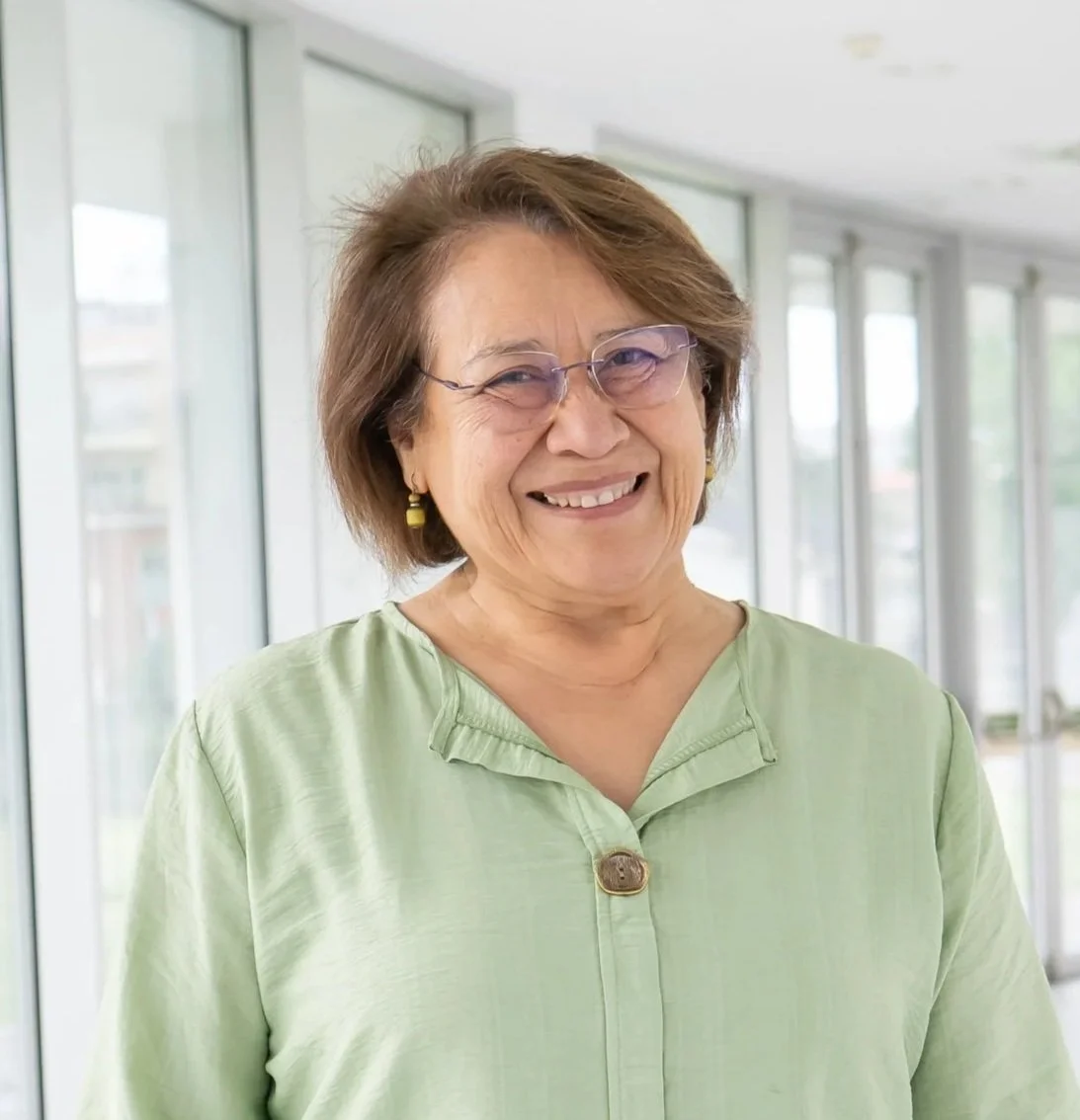
Clivia Sotomayor Torres
INL Director-General
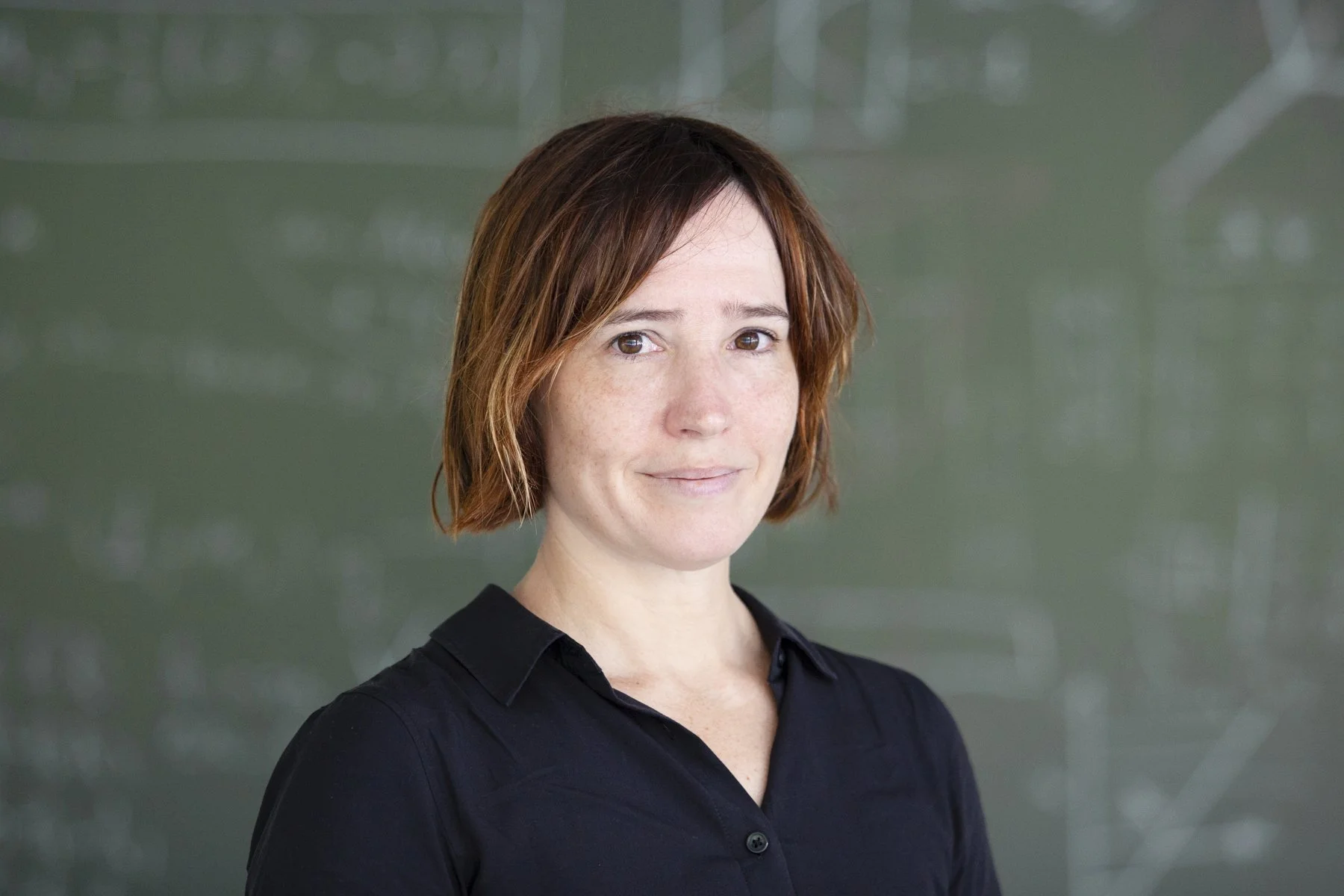
Professor at Université de Sherbrooke
Maia García Vergniory
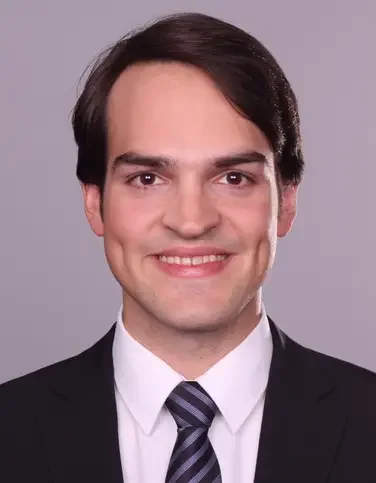
Niels Schröter
Professor of Physics at Martin-Luther University
Call for Abstracts – Poster Session
The Iberian-German WE-Heraeus Seminar 2026 invites abstracts for poster presentations.
Our poster session will showcase cutting-edge research and emerging directions in topological materials, marking a decade of remarkable progress since the 2016 Nobel Prize. We welcome contributions from early-career researchers, postdoctoral fellows, and senior scientists alike.
Topics of interest include:
Topological insulators, semimetals, and superconductors
Topological photonics and phononics
AI-driven methods for materials discover
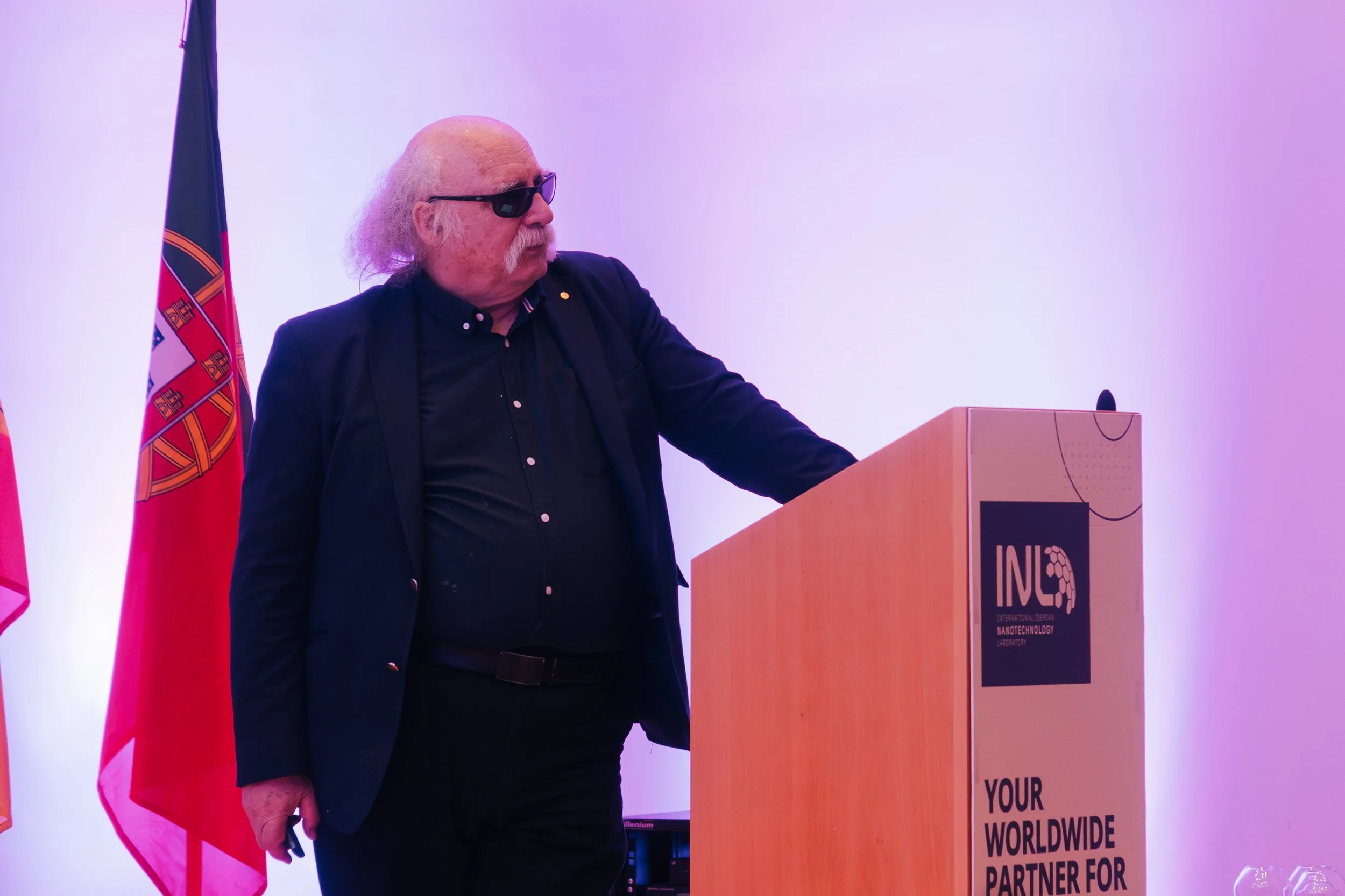
Event Gallery
Five days. 33 speakers. One shared mission: advancing the frontiers of topological materials.
The Iberian-German WE-Heraeus Seminar 2026 brought together world-leading experts and next-generation researchers in condensed matter physics, photonics, and quantum materials. From Nobel Laureate Duncan Haldane's opening lecture to hands-on poster sessions and excursions through Braga, these images capture the energy, collaboration, and discoveries that defined this milestone event.
Venue

The INL International Iberian Nanotechnology Laboratory, located in Braga (North of Portugal), was founded by the governments of Portugal and Spain under an international legal framework to perform interdisciplinary research and deploy and articulate nanotechnology for the benefit of society.
INL aims to become the worldwide hub for nanotechnology, addressing society’s grand challenges.
INL – International Iberian Nanotechnology Laboratory
Av. Mestre José Veiga
4715-330 Braga | Portugal
About the Wilhelm and Else Heraeus Foundation
Based in Germany, the Wilhelm and Else Heraeus Foundation is dedicated to advancing education and research in the natural sciences. Through fully-funded scientific events like this seminar, the Foundation plays a key role in nurturing international cooperation and supporting the next generation of scientists.
Let’s talk!
For any queries, please get in touch with the Conference Team. Fill in the form, and we will be in touch soon!
INL – International Iberian Nanotechnology Laboratory
Av. Mestre José Veiga
4715-330 Braga | Portugal